


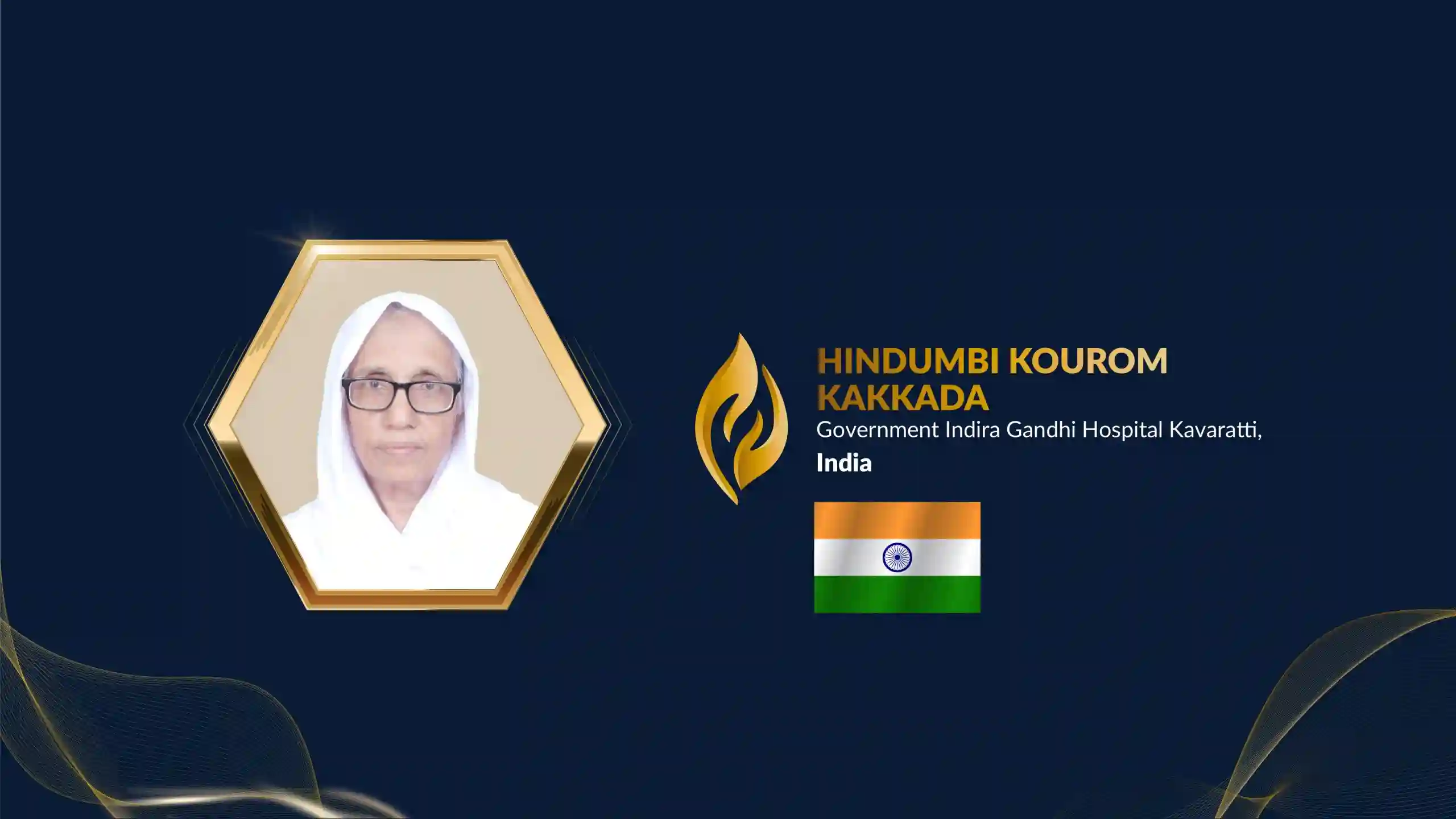
For over five decades, when medical emergencies struck the remote islands of Lakshadweep, one name quietly stood at the centre of countless life-saving efforts — Hindumbi Kaurom Kakkada.
Today, at 80, the veteran nurse from Government Indira Gandhi Hospital in Kavaratti has been recognised among the Top 10 finalists globally for the Aster Guardians Global Nursing Award 2026, selected from over 134,000 registrations across 214 countries and economies. But long before international recognition found her, Hindumbi had already become a lifeline for generations across the islands.
Her story is not merely about nursing. It is about endurance, resilience, and building healthcare access in one of India’s most geographically isolated regions — often under conditions unimaginable in modern medicine.
Hindumbi began her career at a time when Lakshadweep had limited electricity, minimal healthcare infrastructure, severe staff shortages, and almost no emergency transport systems. Medical supplies arrived from Kochi after long delays, while emergency travel between islands depended largely on fishing boats and naval ships.
There were no advanced operation theatres, no rapid evacuation systems, and often no certainty that help would arrive on time.
Yet emergencies never waited.
She recalls assisting surgeries and emergency procedures under kerosene lamps during power cuts, while doctors and nurses worked through the night with whatever resources were available. At times, only two or three nurses managed nearly 50 hospital beds, forcing continuous 24-hour duty cycles.
Over the years, Hindumbi assisted in nearly 22,000 surgeries and emergency cases, becoming one of the most trusted healthcare figures across the islands.
One of the most critical moments in her career came during a high-risk maternal emergency on Agatti Island. A pregnant woman suffered severe blood loss and could not be treated locally due to the lack of advanced facilities. Hindumbi and the medical team transported the patient back to Kavaratti on a fishing boat while administering a blood transfusion during the journey. After reaching the hospital, a successful cesarean section was performed, saving both mother and child.
In another emergency during the monsoon season in the 1980s, she travelled overnight on a naval ship to Amini Island after a pregnant woman entered critical labour and could no longer be shifted safely. With limited equipment and infrastructure available, the team carried out a forceps delivery on the island itself, ensuring the survival of both the mother and the baby.
But Hindumbi’s contribution extended far beyond hospital walls.
She spent years travelling from island to island alongside medical officers, carrying medicines door-to-door, promoting immunisation, educating communities about hygiene, and encouraging institutional deliveries at a time when healthcare awareness remained limited.
During cholera outbreaks, she travelled across islands by boat to support treatment, containment efforts, and hygiene awareness campaigns despite the personal risks involved. She also continued serving during major crises including the 2004 tsunami and the COVID-19 pandemic.
Even retirement did not end her service.
After retiring at the age of 60, Hindumbi rejoined within three months as a contract nurse and continues to report for duty regularly at the hospital.
Born and raised in Kavaratti, she comes from a family deeply rooted in public service. Her father participated in India’s freedom movement and the Dandi March alongside Mahatma Gandhi — a legacy she says shaped her commitment towards serving people despite personal and professional hardships.
She remembers returning to work shortly after childbirth herself because there were simply not enough nurses available to manage patient care.
Today, she says healthcare in Lakshadweep has transformed significantly compared to the early years of her career. Better hospital infrastructure, improved staffing, helicopters, flights, and emergency evacuation services have changed the healthcare landscape across the islands.
Yet for many residents, Hindumbi remains more than a nurse.
Across Lakshadweep, families still recognise her as the woman who helped deliver their children, supported loved ones through medical emergencies, and stood beside patients during some of the most difficult moments of their lives.
Speaking about the profession she dedicated her life to, Hindumbi says simply:
“Nursing is great work. We care for bedridden patients as if they were our own parents. There is empathy and dignity in this profession.”
At a time when healthcare systems globally are increasingly discussing resilience, workforce shortages, and equitable access to care, Hindumbi Kaurom Kakkada’s journey stands as a reminder that some of the strongest pillars of healthcare are often built quietly — far away from recognition, in the most remote corners of the world.