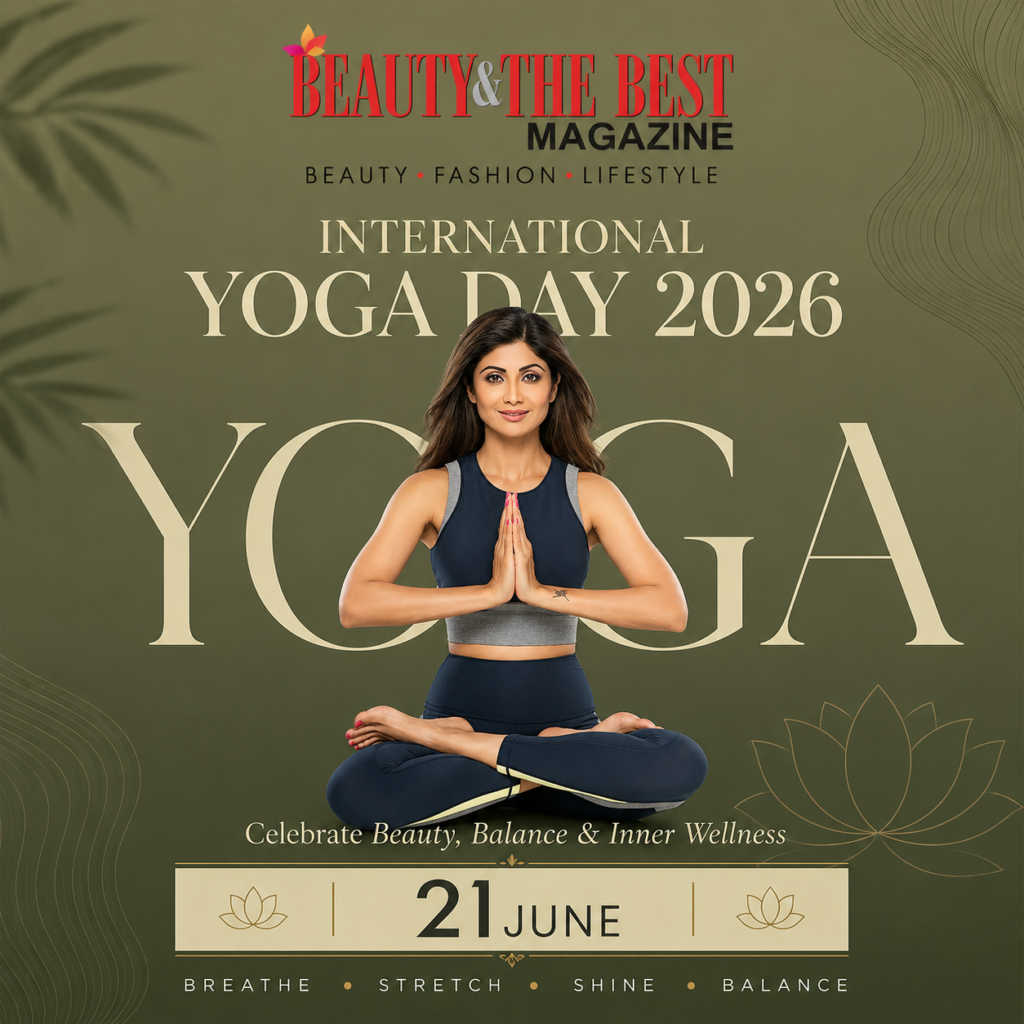
International Yoga Day 2026 is a powerful reminder that true beauty begins with balance — balance of the body, mind, emotions and lifestyle. Celebrated every year on 21 June, this global wellness occasion inspires people across the world to reconnect with the ancient practice of yoga and experience its benefits in modern life. For Beauty & The Best Magazine, yoga is not just a fitness routine. It is a complete lifestyle that connects beauty, confidence, inner peace, self-discipline and graceful living. In a world where people often focus on outer appearance, yoga teaches us that real beauty begins from within. A calm mind, healthy body, glowing skin, confident posture and positive energy together create a truly beautiful personality. This is why International Yoga Day 2026 is the perfect occasion to celebrate yoga as a natural path to beauty, wellness and self-transformation. Why International Yoga Day 2026 Is Important International Yoga Day 2026 encourages everyone to pause, breathe, stretch and reconnect with themselves. Today’s fast-paced lifestyle often brings stress, anxiety, poor posture, lack of sleep, screen fatigue and low energy. Yoga offers a gentle yet powerful way to restore physical and mental balance. Yoga is suitable for people of all ages and lifestyles. Whether someone is a student, professional, entrepreneur, homemaker, artist, model, pageant contestant or wellness enthusiast, yoga can become a strong foundation for healthy living. The beauty of yoga lies in its simplicity. It does not require heavy equipment or an expensive setup. A peaceful space, a yoga mat, comfortable clothing and a sincere intention are enough to begin. This makes yoga one of the most accessible wellness practices for today’s generation. Yoga and Beauty: The Secret of Natural Glow Beauty is not limited to makeup, skincare, fashion or grooming. True beauty is reflected in how a person feels, carries themselves and responds to life. Yoga helps improve breathing, posture, relaxation and body awareness — all of which support natural beauty. Regular yoga practice may help reduce stress, improve sleep quality and support better overall wellbeing. When stress reduces, the face often looks fresher, the body feels lighter and the mind becomes calmer. A peaceful mind reflects through the eyes, smile and personality. This is why yoga is often considered one of the most natural beauty rituals. It supports beauty from the inside out. For readers of Beauty & The Best Magazine, yoga beautifully complements skincare, fashion, grooming and wellness routines. It adds the missing element: inner balance. International Yoga Day 2026 and Confidence Building Confidence is one of the strongest forms of beauty. A confident person naturally attracts attention because they carry themselves with grace and strength. Yoga helps improve posture, body awareness, breathing control and emotional stability. Practices such as Tadasana, Vrikshasana, Bhujangasana, Vajrasana and Surya Namaskar can support body alignment, flexibility and strength. These asanas are especially useful for people in pageantry, fashion, media, leadership, public speaking and performance-based fields. Breathing techniques like Pranayama can help calm the mind before interviews, stage appearances, meetings, shoots or important life moments. Yoga teaches us to stand tall, breathe deeply and move with awareness. On International Yoga Day 2026, this message becomes even more relevant: beauty is not only about how you look, but also about how confidently you carry yourself. 7 Powerful Benefits of Yoga for Beauty and Wellness 1. Improves Posture Good posture instantly enhances personality. Yoga helps align the spine, strengthen the core and improve body balance. A graceful posture adds elegance to your presence. 2. Reduces Stress Stress affects skin, mood, sleep and energy. Yoga supports relaxation and helps create emotional stability. A calm mind can reflect through a fresh face and peaceful expression. 3. Supports Natural Glow Better breathing, mindful movement and improved relaxation can support a healthier-looking appearance. Yoga helps the body feel more active and refreshed. 4. Builds Flexibility and Strength Yoga keeps the body active, flexible and graceful without harsh or aggressive movements. It supports strength with softness — a perfect combination for a balanced lifestyle. 5. Helps Improve Sleep A relaxed body and peaceful mind can support better sleep. Good sleep is essential for skin health, energy, mood and overall wellness. 6. Boosts Confidence Yoga improves self-awareness and inner stability. When you feel connected to your body and breath, you naturally feel more confident in daily life. 7. Creates Inner Peace True beauty comes from positive thoughts, peaceful energy and balanced living. Yoga helps nurture all three. Simple Yoga Routine for International Yoga Day 2026 To celebrate International Yoga Day 2026, begin your morning with a simple 20-minute yoga routine. Start with deep breathing for three minutes. Follow it with gentle neck, shoulder and back stretches. Practice five rounds of Surya Namaskar, if comfortable. Then add Tadasana, Vrikshasana, Bhujangasana and Vajrasana. End your session with five minutes of meditation or silent gratitude. Keep your phone away, choose a peaceful space and focus on your breath. Yoga is not about perfection. It is about connection — connection with your body, your thoughts and your inner self. Yoga for Modern Lifestyle and Inner Wellness In modern lifestyle, wellness is no longer optional. It is essential. People are becoming more aware of mental health, emotional balance, fitness, self-care and mindful living. International Yoga Day 2026 reminds us that small daily practices can create powerful transformation. For women and men balancing careers, families, social responsibilities and personal goals, yoga can become a daily source of strength. It helps create discipline, patience and self-control. In the beauty and fashion industry, yoga also plays an important role. Good posture, calm confidence, glowing energy and graceful body language are all important parts of a strong personality. Yoga supports all of these naturally. This is why yoga is not just a wellness trend. It is a timeless practice for complete lifestyle transformation. Beauty & The Best Magazine Message for International Yoga Day 2026 At Beauty & The Best Magazine, we believe that beauty is complete only when it includes wellness, confidence, grace and inner peace. Fashion may