


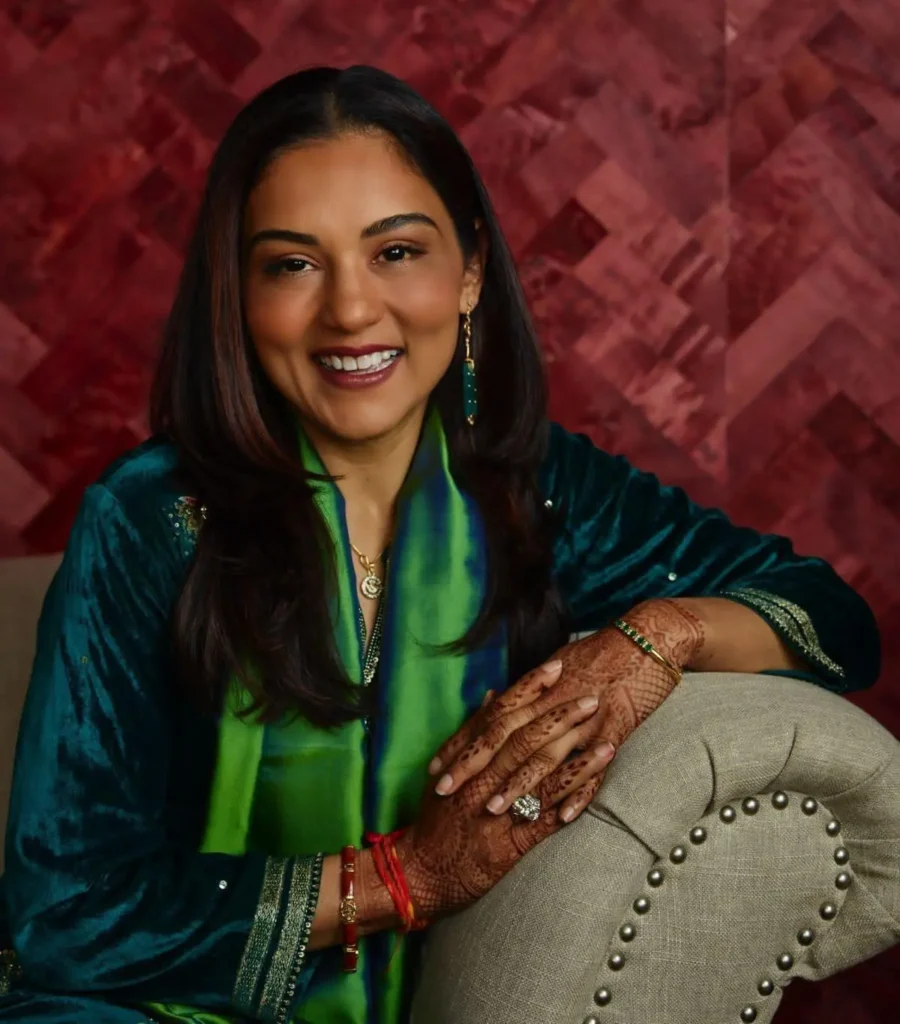
Royal Roots,Global Reach!
In Conversation with Padmaja Kumari Parmar Princess of Mewar – You come from a legacy that carries centuries of history. What parts of that legacy feel most relevant to the woman you are today? A: For me, the most meaningful part of the Mewar legacy is custodianship—the understanding that heritage is not simply ours to possess, but ours to care for and carry forward. It has shaped both the woman I am and the work I choose to do. My grandfather, Maharana Bhagwat Singhji Mewar, established the Maharana of Mewar Charitable Foundation in 1969, rooted in service to society and custodianship. Those same values guide my work through The Friends of Mewar, particularly in preventive healthcare, women’s empowerment and education, and cultural preservation. I believe a legacy finds its meaning in how we live it. For me, that means honouring the past while responding to the needs of the present, and passing on not only our heritage, but the sense of responsibility that comes with it. – How has being a woman in a prominent royal family shaped your understanding of responsibility, visibility and choice? A: Being a woman in today’s time with my family background has made me conscious of both the privilege of visibility and the responsibility that comes with it. People often have an impression of you before they know you. I have learned that what matters most is not the attention you receive, but what you choose to do with it. Through The Friends of Mewar, I have focused on healthcare advocacy, women’s empowerment, education and cultural preservation. For me, visibility has value when it brings attention to the needs of others. A name may open a door, but it is the work that gives your presence meaning. I also believe that responsibility and personal choice can coexist. I can honour the heritage I come from while defining my own path—as a woman, through my convictions, my decisions and the work I choose to pursue. A lesson my mother shared early on with me. – There is often a perception that privilege makes life easier. What are some of the expectations or pressures that come with your background that people may not see? A: What people may not always see is the expectation that you represent more than yourself—a family, a history and the values entrusted to you. There is a responsibility to honour that inheritance, while also finding the freedom to be yourself and make your own choices. I try to approach that responsibility with gratitude and purpose. For me, the question is not simply what privilege offers me, but what I can do with it for others. Access is most meaningful when it helps open doors beyond your own. – How do you create an identity for yourself while carrying a family name that is already so well known? A: I have never felt that finding my own identity requires stepping away from my family name. My heritage is an important part of who I am, but my experiences, convictions and choices have shaped me too. Through The Friends of Mewar, I have brought together causes that matter deeply to me—preventive healthcare, women’s empowerment and education, and cultural preservation. This work allows me to carry forward the values I inherited in a way that is genuinely my own. My healthcare advocacy is also deeply personal. I was diagnosed with Type 1 diabetes at five, and after more than four decades of living with it, awareness and access are not abstract concerns to me. They are part of my everyday life. For me, identity is not something I need to separate from my heritage. It is something I continue to build through how I live and what I choose to contribute. – Was there ever a point when you consciously decided that you wanted your public identity to be defined by your work rather than just your heritage? A: No, I have never felt the need to separate my public identity from my heritage. I am honoured to carry it, and I have always wanted my work—and the way I am known—to reflect the values it represents. For me, service and custodianship are at the heart of that heritage. My work through The Friends of Mewar and my Type 1 diabetes advocacy are personal expressions of those values. It is not a question of being defined by my work rather than my heritage. It is about ensuring that the work I do honours what I have inherited and gives it meaning in my own – Your work today extends into healthcare and advocacy. What made these causes personally meaningful to you? A: Healthcare has been personal to me since I was five, when I was diagnosed with Type 1 diabetes. Living with it for more than four decades has shaped my understanding of what it means to need consistent care, reliable information and support—not occasionally, but every day. That experience is at the heart of my advocacy. It has also deepened my commitment to broader healthcare access and preventive care through The Friends of Mewar, alongside our work in women’s empowerment, education and cultural preservation. What makes this work meaningful is the opportunity to turn my own experience into something useful for others. I cannot change the fact that I was diagnosed so young, but I can choose what I do with that experience—and use my voice to help others feel better informed, supported and less alone. – What does independence mean to you when you come from a family and legacy where expectations can be very strong? A: For me, independence begins with having your own mind—and the confidence to act on your convictions. It does not mean distancing myself from my family or heritage. I can value their guidance while making choices that are genuinely my own and taking responsibility for them. I see independence not as a rejection of belonging, but as the freedom